
Pregnancy Wellness
Signs of Labor: How to Tell Braxton Hicks From the Real Thing
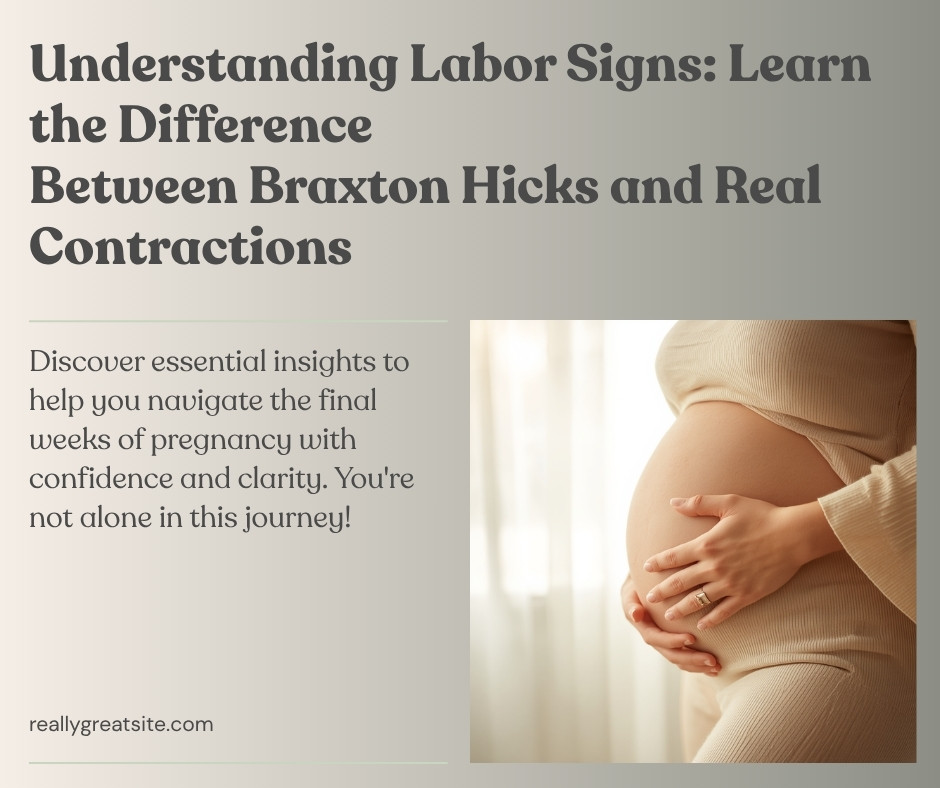
As your due date nears, every twinge makes you wonder: is this it? Knowing the difference between practice contractions and true labor can save you a stressful trip — or tell you it's time to go. Here's how to read the signs.
A note of care: This is general information, not medical advice. When in doubt, always call your provider or maternity unit.
Braxton Hicks vs. True Labor Contractions
Braxton Hicks (practice contractions)
- Irregular and unpredictable
- Don't get consistently closer together
- Often ease with rest, hydration, or a change of position
- Usually felt in the front, and are uncomfortable rather than painful
True labor contractions
- Come at regular intervals and get closer together over time
- Grow longer, stronger, and more intense
- Don't ease when you move or rest
- Often start in the back and wrap around the front
Other Early Signs of Labor
- The "bloody show" (loss of the mucus plug)
- Your water breaking (a gush or slow trickle of fluid)
- Persistent low back ache and pressure
- Baby "dropping" (lightening) as they settle into the pelvis
- Loose stools or a burst of nesting energy
Timing Your Contractions
Time from the start of one contraction to the start of the next. A common guideline is the 5-1-1 rule: contractions 5 minutes apart, each lasting 1 minute, for at least 1 hour. Have your hospital bag packed well before this point.
When to Go to the Hospital
Call your provider or go in if: your contractions follow the 5-1-1 pattern, your water breaks, you have vaginal bleeding, you notice reduced fetal movement, or you have severe headache or vision changes. When unsure, always call — as the Cleveland Clinic notes, your care team would rather hear from you.
Frequently Asked Questions
How do I know if I'm in real labor?
True labor contractions are regular, get closer together, grow stronger, and don't ease with rest — unlike irregular Braxton Hicks.
What does the 5-1-1 rule mean?
Contractions about 5 minutes apart, each lasting 1 minute, continuing for at least 1 hour — a common sign it's time to go in.
What are the first signs labor is near?
The bloody show, water breaking, low back pressure, the baby dropping, and a burst of nesting energy can all signal labor is approaching.
Should I go to the hospital if my water breaks but I have no contractions?
Yes, call your provider — they'll advise you, as timing and next steps depend on your situation.
References & further reading
Keep reading
Pregnancy Style
The Best Maternity Loungewear for Every Trimester
Discover the softest maternity loungewear for every trimester. A trimester-by-trimester guide to comfy, bump-friendly pieces you'll live in — from Mom Comfort.
Postpartum
Postpartum Recovery Essentials: A Gentle Week-by-Week Guide
A soothing week-by-week postpartum recovery guide covering healing, comfort, and self-care essentials for the fourth trimester. From Mom Comfort.